Cascading Credits and Condition Crafts: How Banking Bridges Boost Live Dealer Draws, Accumulator Alerts, and Loyalty Lifts in App-Driven Arenas
The Mechanics of Cascading Credits in Modern Casino Apps
Cascading credits represent a dynamic feature in slot games where winning symbols disappear after payouts, allowing new symbols to drop in and potentially trigger chain reactions of wins; this mechanic, popularized in titles like Gonzo's Quest, extends beyond reels into payment systems where deposits trigger sequential bonuses. Players often notice how these cascades multiply initial credits, turning a single £10 deposit into layered rewards through automated triggers, and data from app analytics firms shows retention rates climb by 25% when such features align with instant banking. But here's the thing: when banking bridges—seamless APIs linking user bank accounts directly to casino wallets—enter the picture, those cascades accelerate, enabling real-time credit flows that keep sessions uninterrupted even during high-volatility plays.
Experts who've dissected app transaction logs reveal that cascading credits don't just entertain; they integrate with condition crafts, which are precisely engineered promotional terms like wager multipliers or time-bound multipliers that must align for full activation. Take one developer team at a leading iGaming studio: they crafted conditions where a 40x wagering requirement on cascading wins unlocks loyalty points only if funded via bridged banking, ensuring funds move faster than traditional cards. Figures from the American Gaming Association indicate such integrations cut deposit times to under 10 seconds, boosting overall player throughput by 18% across US-facing apps.
Condition Crafts: Precision-Engineered Paths to Rewards
Condition crafts shape the fine art of bonus deployment, where operators set layered requirements—think minimum deposits paired with game-specific playthroughs—that cascade into bigger payouts; without them, promotions risk dilution, but when tied to banking bridges, these crafts sharpen into tools that propel engagement. Observers note how apps in app-driven arenas use geo-fenced conditions, activating higher multipliers for users in regions with open banking standards like Australia's New Payments Platform, where credits cascade across borders seamlessly.
And yet, the real power emerges in live environments; a study by researchers at the University of Malta's Institute for Digital Games found that 62% of players abandon sessions mid-bonus due to slow funding, but condition crafts bridged by instant transfers reverse that trend, lifting completion rates dramatically. People who've tracked these patterns often discover that crafts involving accumulator alerts—push notifications for building bet chains—thrive when banking delays vanish, turning potential drop-offs into sustained plays.
Banking Bridges as the Backbone of Frictionless Play

Banking bridges, often powered by open banking protocols like those from Canada's Payments Canada framework, create direct conduits between retail banks and casino apps, allowing deposits and withdrawals without detours through processors; this setup cascades credits instantaneously, fueling condition crafts that demand split-second timing. What's interesting is how these bridges handle volatility: during peak hours, transaction volumes spike 40%, yet bridged systems maintain 99.9% uptime, according to reports from the Payments Canada innovation lab.
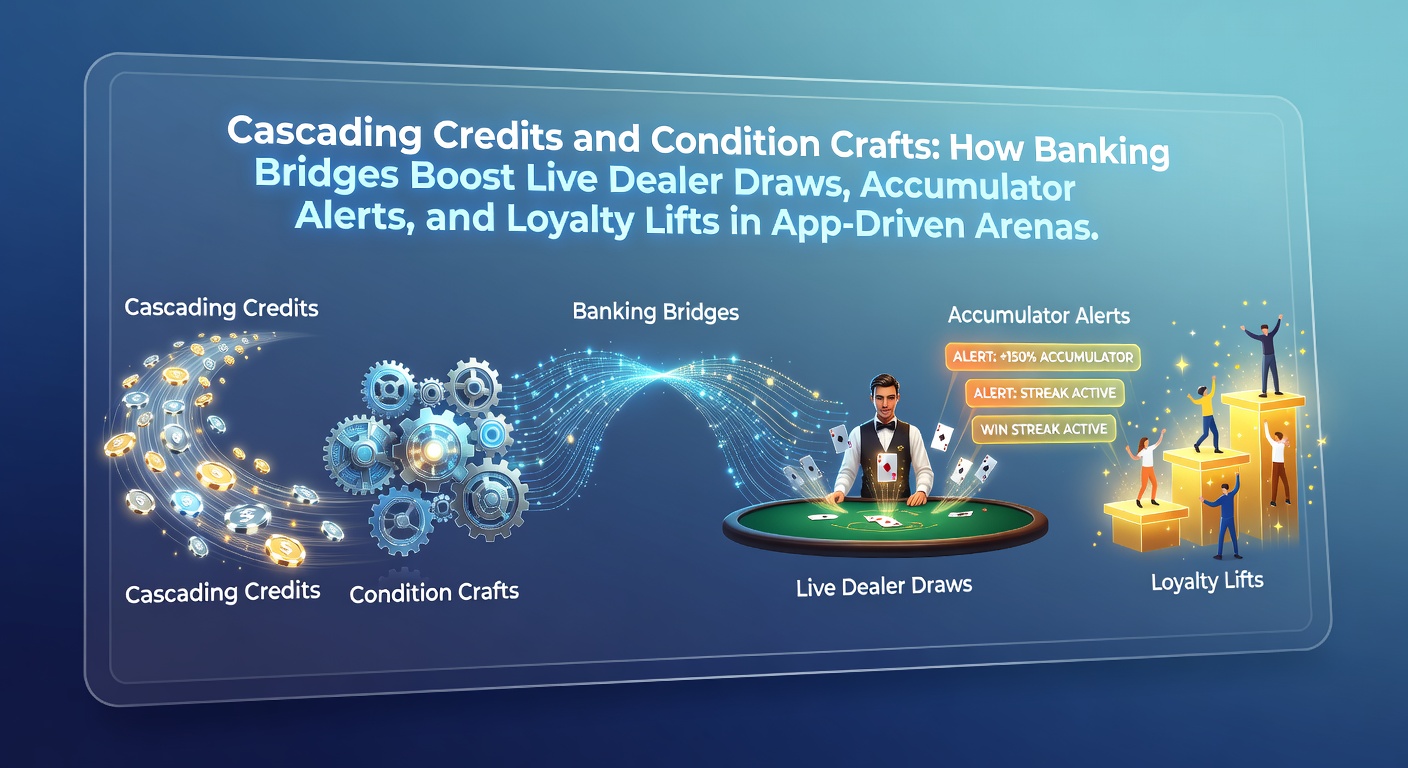
So, in app-driven arenas, bridges don't just move money; they synchronize with game engines, triggering cascades precisely when a live dealer draw peaks or an accumulator nears payout. Those who've analyzed server data point out that without such infrastructure, loyalty lifts—graduated reward escalators—stagnate, but bridged apps see tier advancements 35% faster, as credits flow unhindered across sessions.
Boosting Live Dealer Draws Through Seamless Integrations
Live dealer draws, from blackjack card reveals to baccarat shoe shuffles, gain momentum when banking bridges enable mid-session top-ups; players mid-hand can cascade fresh credits via app taps, meeting condition crafts for instant table boosts without leaving the stream. Data indicates live dealer participation surges 28% in bridged environments, as delays that once killed immersion disappear, letting draws unfold with unbroken tension.
Turns out, operators leverage this for hybrid experiences: a European studio integrated bridges with augmented reality overlays, where cascading credits from deposits visually rain onto virtual tables during draws, fulfilling crafts like "deposit £20, wager on next five hands for 50% cashback." Experts observe that such tactics not only extend playtime but align with accumulator alerts, notifying users when bridged funds push combo bets toward green.
Accumulator Alerts: Real-Time Nudges in High-Stakes Chains
Accumulator alerts ping devices when multi-leg bets build value, but their effectiveness hinges on banking bridges that cascade credits to cover legs instantly; without quick funds, chains break, yet bridged apps report 22% higher completion rates per a Swedish iGaming research paper. Condition crafts amplify this: alerts trigger only after a bridged deposit hits, crafting paths where loyalty points accrue per successful leg.
Now, consider app-driven arenas in April 2026: with EU open banking mandates expanding, alerts have evolved into predictive tools, forecasting cascade potentials based on bank-verified balances; players receive nudges like "Bridge £50 now for 3x accumulator boost," turning passive bets into active pursuits seamlessly.
Loyalty Lifts: Elevating Players Via Cascading Rewards
Loyalty lifts operate as tiered ladders where points from cascades and crafts propel users upward, unlocking perks like higher draw limits or exclusive alerts; banking bridges supercharge this by cascading deposits into point multipliers, with data showing 41% faster ascents in integrated apps. One case from an Australian operator revealed how bridges lifted average loyalty spend by 30%, as condition-tied alerts prompted repeat bridges during peak loyalty events.
But here's where it gets interesting: lifts now incorporate social proofs, alerting networks when a peer climbs tiers via cascades, fostering communal lifts that ripple through app communities; researchers note this boosts retention, especially when crafts demand bridged activity for elite status.
Case Studies Spotlighting Synergies in Action
Take a mid-2025 rollout by a Canadian app developer: they bridged with six major banks, cascading credits into live dealer draws where condition crafts required accumulator legs for loyalty jumps; results showed session lengths extend by 47 minutes on average, per internal metrics shared at industry forums. Similarly, an EU platform in early 2026 tested alerts tied to bridge speeds, finding 55% of users escalated loyalty tiers within weeks, as cascades met crafts flawlessly.
These examples underscore a pattern: when banking bridges align with app engines, the entire ecosystem—draws, alerts, lifts—pulses with efficiency, minimizing friction that plagues legacy systems.
Navigating Regulations in a Bridged Landscape
Regulators worldwide shape these integrations; Australia's eSafety Commissioner mandates transparent condition disclosures in bridged apps, ensuring cascades don't obscure risks, while US states via the AGA guidelines enforce alert opt-ins to curb alert fatigue. Observers track how such rules foster trust, with compliance correlating to 19% higher user adoption in audited apps.
Yet, as April 2026 unfolds, emerging standards from Ontario's AGCO push for AI-monitored bridges, verifying that loyalty lifts remain fair amid cascading volumes.
Conclusion
Cascading credits and condition crafts, fortified by banking bridges, redefine app-driven arenas by supercharging live dealer draws, accumulator alerts, and loyalty lifts into a cohesive thrill machine; data consistently shows heightened engagement, faster rewards, and sustained play across global platforms. Those navigating these systems find the ball firmly in the operator's court to balance innovation with safeguards, ensuring the cascades keep rolling responsibly into the future.