Policy Intersections Guiding Access Pathways in Digital Gaming Platforms
Written by Katja Richter · Jul 24, 2026
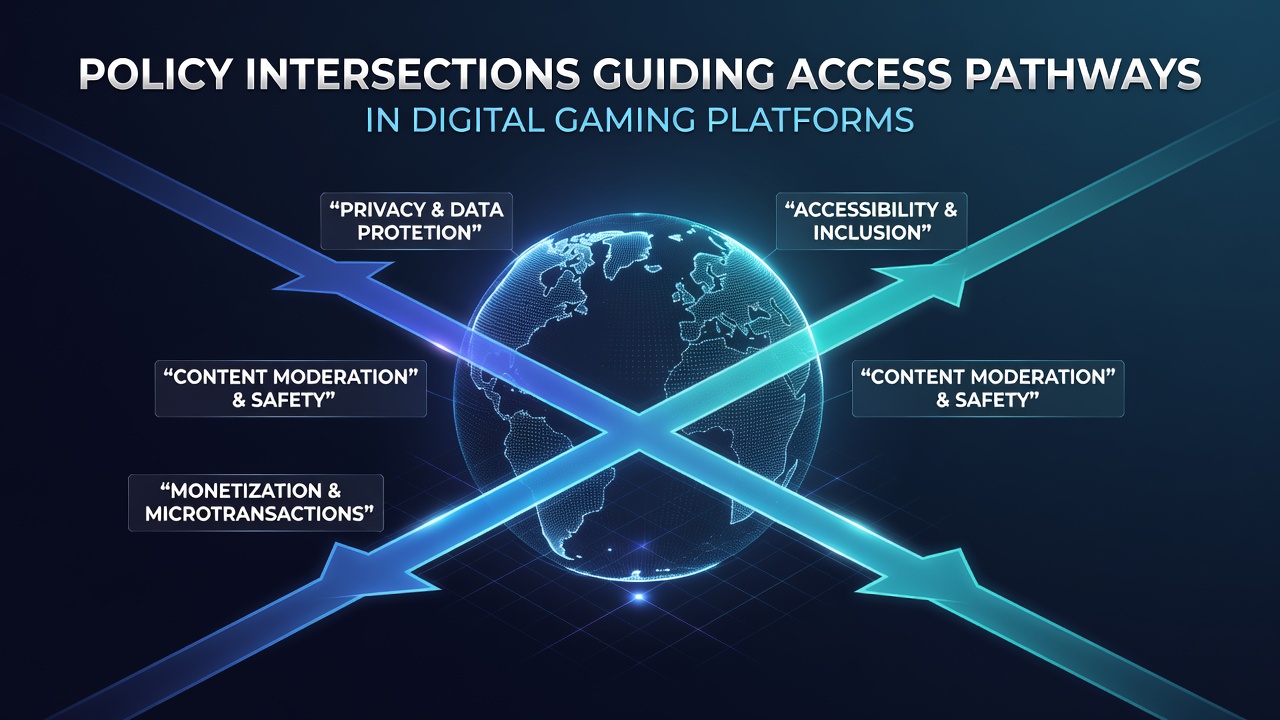
Policy Intersections Guiding Access Pathways in Digital Gaming Platforms
Digital gaming platforms operate under multiple overlapping policy regimes that shape user access from the moment someone attempts to create an account or download a title, and these regimes include data protection statutes, age-appropriate design codes, platform liability rules, and cross-border trade agreements. Observers note that when privacy requirements meet content rating systems, the result often determines whether a user in one jurisdiction can reach the same game library available to someone elsewhere, while platform operators must reconcile conflicting demands without disrupting service continuity.
Privacy Frameworks adn Entry Points
Regulations such as the European Union's General Data Protection Regulation intersect with national implementations of the Digital Services Act, which together require platforms to verify user consent and limit data collection before granting full access to multiplayer features or in-game economies, and data from industry analyses indicate that these rules have prompted many operators to introduce tiered onboarding flows that separate basic browsing from account creation. In the United States, state-level privacy laws in California and Virginia add further layers that affect how gaming services handle location data and behavioral tracking, leading companies to adjust geofencing mechanisms that route users toward different registration paths depending on their detected region.
Researchers at academic institutions have documented how these privacy intersections influence retention rates, particularly when younger users encounter additional verification steps that delay entry into social features, and one study released in early 2025 highlighted measurable differences in completion rates between regions with strict consent rules and those with lighter oversight.
Age Verification and Content Pathways
Age gates represent another critical intersection because they combine consumer protection directives with platform-specific rating systems maintained by organizations such as the Entertainment Software Association and its international counterparts, and platforms must therefore decide whether to rely on self-declaration, credit card checks, or third-party identity services before unlocking mature-rated content. In July 2026 several jurisdictions are scheduled to enforce updated guidance on automated age estimation technologies, which will require operators to reassess current verification methods and potentially redesign access sequences that currently allow limited trial play before full authentication.
Those who have examined enforcement actions point out that platforms balancing these obligations often create parallel pathways, one for verified adults and another for supervised accounts, and such bifurcation directly affects how game publishers distribute updates or seasonal events across user segments.

Cross-Border Trade and Liability Rules
Trade agreements and liability directives add further complexity because they determine whether a platform can host user-generated content or third-party mods without assuming legal responsibility in every market where the service operates, and the European Commission's approach under the Digital Services Act contrasts with evolving standards in Australia and Canada that emphasize proactive moderation before access is granted. Platforms therefore maintain separate content review queues that prioritize different risk categories depending on the user's registered location, resulting in uneven availability of certain titles or community features.
Industry reports compiled by trade associations show that these liability intersections have encouraged larger operators to invest in centralized policy engines capable of applying jurisdiction-specific rules automatically at login, while smaller platforms often restrict their service footprint to fewer regions to avoid compliance overhead.
Emerging Technology and Future Adjustments
Artificial intelligence tools used for moderation and recommendation now sit at the intersection of emerging AI governance proposals and existing gaming regulations, and regulators in multiple regions continue to evaluate how algorithmic transparency requirements might alter the visibility of certain games within search results or lobby interfaces. Data released by research consortia indicate that platforms testing these tools have observed shifts in the speed at which new releases reach different user cohorts, particularly when automated systems flag content for additional human review before it appears in regional storefronts.
Stakeholders note that as hardware evolves toward cloud streaming, questions about infrastructure access and net neutrality intersect with gaming policies, potentially affecting latency-sensitive titles differently across markets and prompting operators to negotiate specialized peering arrangements that comply with both telecommunications and content rules.
Conclusion
The intersections among privacy, age, liability, and technology policies continue to define the routes users follow when entering digital gaming platforms, and companies respond by engineering flexible systems that apply the correct combination of checks without creating unnecessary friction. Continued monitoring of regulatory developments scheduled for 2026 and beyond will reveal whether these layered requirements produce more uniform access experiences or further fragmentation across regions and device types.